
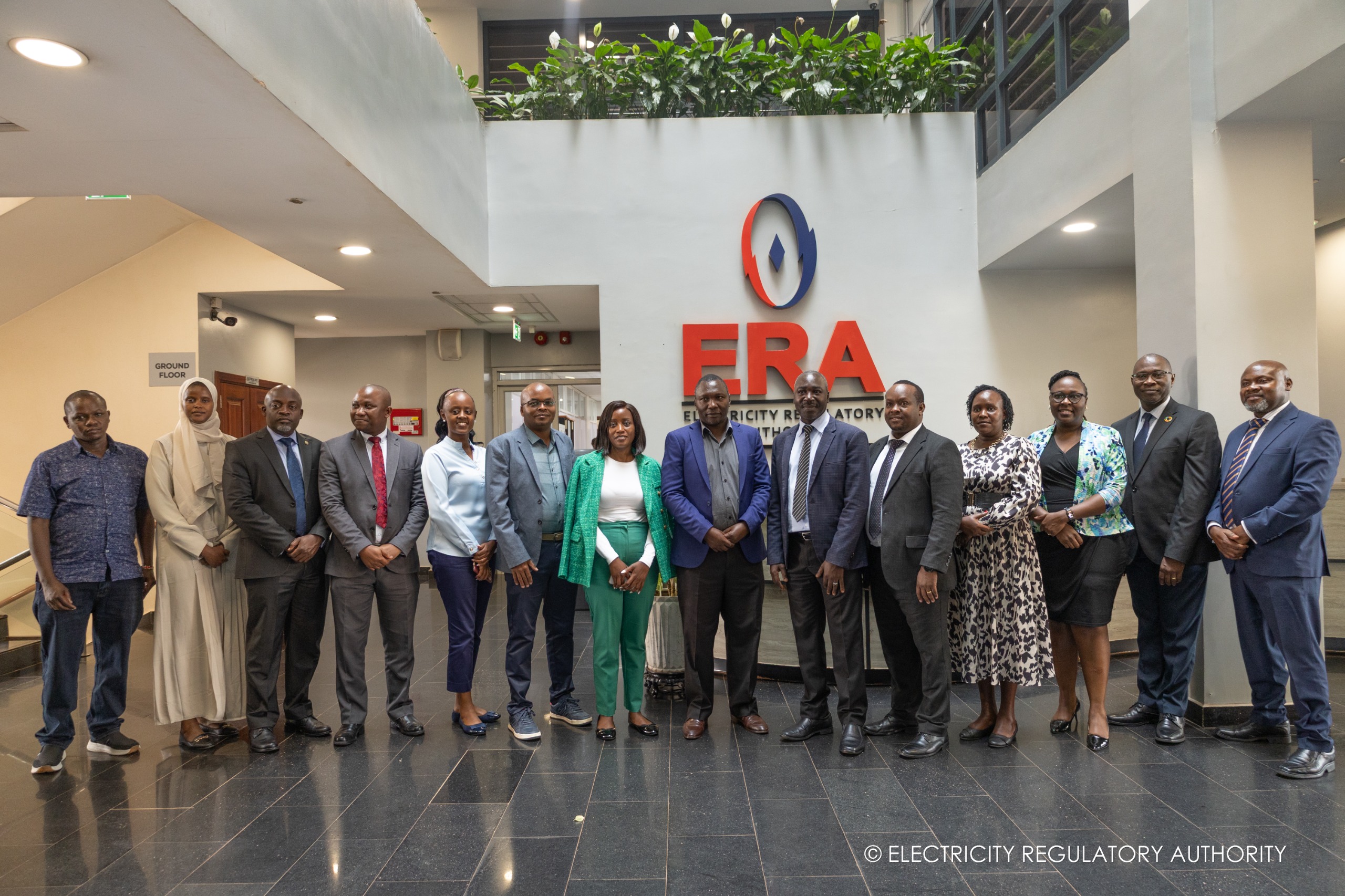
On 22nd June 2026, the Electricity Regulatory Authority (ERA) hosted a delegation from Kenya’s Energy and Petroleum Regulatory Authority (EPRA) for a five-day benchmarking and peer-learning engagement visit focused on how Uganda integrates Environmental protection, Public safety, and Regulatory oversight into the development of its Electricity sector.
The Second day of the engagement, held on 23rd June 2026, provided an opportunity for the two regulators to exchange experiences and best practices on ensuring that the expansion of Electricity infrastructure goes hand in hand with environmental stewardship and sustainable development.
Environmental Protection Begins Before Construction
One of the key lessons shared by ERA was that Environmental compliance is not treated as a one-off licensing requirement, but as a continuous process that begins long before construction starts.
Before any Electricity project is licenced, developers are required to undertake Environmental and Social Impact Assessments (ESIAs), hydrological studies for hydropower projects, resettlement plans where necessary, and other technical assessments. These studies enable the Authority to identify environmental and social risks early and prescribe measures to mitigate them.
ERA works closely with the National Environment Management Authority (NEMA) to ensure that no Electricity project proceeds without the necessary Environmental approvals, reinforcing Uganda’s commitment to Environmentally responsible infrastructure development.
Communities Are Central to Project Development
Recognising that Electricity projects directly affect surrounding communities, ERA places strong emphasis on stakeholder participation throughout the licensing process.
Developers are required to engage local communities and Leaders before projects are approved, while licence applications are publicly advertised to allow stakeholders to submit comments or objections. According to the Authority, early engagement improves transparency, builds public confidence, and helps address community concerns before they become disputes.
Risk-Based Environmental Monitoring
With Uganda’s Electricity sector continuing to expand, ERA has adopted a risk-based approach to environmental monitoring.
Projects are prioritised according to their Environmental and operational risk profiles, enabling the Authority to focus regulatory resources where they are needed most while maintaining oversight across the entire electricity value chain.
The Authority also collaborates with NEMA through the Environmental Licensing Management Information System (ELMIS), which allows Environmental assessment reports to be reviewed electronically and supports faster, more coordinated regulatory decision-making.
Safety Remains a Regulatory Priority
Beyond Environmental protection, public and occupational safety remain at the centre of ERA’s regulatory mandate.
The Authority ensures that Electricity infrastructure is designed, constructed, operated, and maintained in accordance with National Safety Standards. Companies undertaking electrical works must hold valid construction licences, while technicians and supervisors are required to possess installation permits issued by ERA.
Licensees are also required to report accidents, injuries, and other safety incidents within prescribed timelines. These reports enable the Authority to investigate root causes, monitor safety trends, and implement corrective measures aimed at preventing future incidents.
ERA noted that common safety risks continue to include illegal electricity connections, encroachment on power line wayleaves, unsafe construction activities near electricity infrastructure, and inadequate vegetation management. To address these challenges, utilities are encouraged to undertake continuous public awareness campaigns alongside routine network maintenance.
Strengthening Hydropower Safety
Given Uganda’s growing reliance on hydropower, dam and waterway safety has become an increasingly important area of regulatory oversight.
In addition to reviewing dam safety, ERA now considers the broader network of canals, tunnels, forebays, penstocks, and other water-conveyance structures associated with hydropower projects. This reflects the unique nature of Uganda’s run-of-river hydropower developments, where communities often live close to critical water infrastructure.
Developers are required to prepare emergency response plans, undertake community awareness programmes, and implement engineering measures that safeguard both infrastructure and neighbouring communities. ERA also works closely with the Directorate of Water Resources Management under the Ministry of Water and Environment to strengthen dam safety governance and emergency preparedness.
Learning Together to Build Safer Energy Systems
The benchmarking visit reaffirmed the importance of collaboration among African regulators in strengthening Electricity Sector Governance.
As Uganda continues to expand Electricity Access and attract new investment in Energy infrastructure, ERA remains committed to ensuring that Environmental protection, public safety, and community welfare remain integral to sector development. Through continuous regulatory improvement and Regional knowledge sharing, the Authority is helping build an Electricity Sector that is not only reliable and affordable, but also safe, Environmentally responsible, and sustainable.